
ACCELERATED LARGE FILE TRANSFER





JETSTREAM
CONVENTIONAL TRANSFER
What is accelerated file transfer?
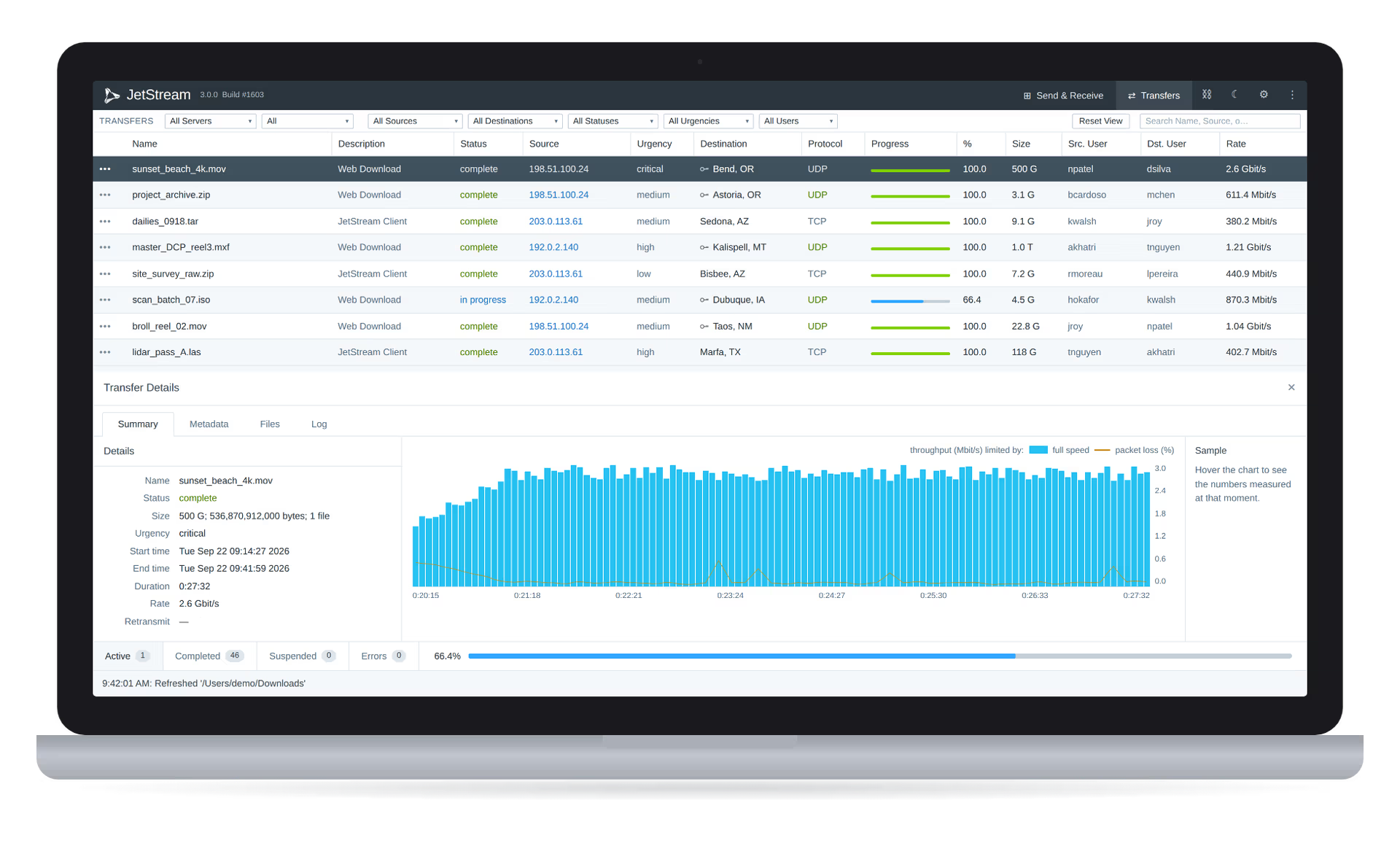
Accelerated file transfer moves data at the full speed a network can carry, rather than the reduced speed that distance and packet loss usually impose. Conventional transfer methods treat lost packets as congestion and slow down, so the further a file travels the less of your available bandwidth it actually uses. JetStream measures the link and keeps it saturated instead. The gain is largest on long, busy or unreliable routes – the ones where conventional transfers lose the most.
What makes JetStream faster?
It uses the whole connection. A conventional transfer over a long or lossy route typically uses a fraction of the bandwidth available to it, and the gap widens the further the file travels. JetStream holds the line saturated regardless, so on international routes transfers that took hours finish in minutes.
Is there a limit on file size, transfer volume, or bandwidth?
No limit on file size or transfer volume, and nothing is throttled nor metered. Allocate as much of your available bandwidth as you choose, up to 5 Gb/s.
How many people can use JetStream?
As many as you like. The client application can be installed by every collaborator, partner, and vendor at no extra cost. What your licence covers is how many transfers run at the same time – and a slot frees the moment a transfer finishes, so one server comfortably serves a roster many times larger than its slot count.
Is JetStream secure?
Every transfer is encrypted in transit via AES-256 encryption. Shareable links can be password-protected and given an expiry date, and are served from a server you run rather than a third-party service.
Do recipients need to install JetStream?
Not since version 3.0. Recipients open a shareable link and download in a standard browser. Senders still use the JetStream desktop application. More on shareable links.